THE WEEKLY BELLOWS /
The Weekly Bellows: The Promise Has to Travel (11/4/26)
What does "your credits can transfer" actually mean for the person deciding whether to return to college? This week, fictional student Rosa helps us examine the new AIM final rule, its future implementation dates, and the handoffs that connect an enrollment promise to an academic decision. Includes a practical worksheet for tracing one public claim all the way to the answer a student needs. From The Innovation Forge. Sources checked November 4, 2026; fictional scenes are illustrative, and the discussion is general reporting rather than institution-specific legal advice.
Listen & watch.
Read the episode.
From The Innovation Forge
Rosa has kept the folder from her first attempt at college. The corners are soft, but the courses inside it still represent evenings she gave up, money she found and work she completed.
At a fictional campus visit, she puts it beside a brochure for a new program. Malik, the enrollment counselor, has explained the application. June, the registrar, has explained how to submit a transcript. Rosa has a different question.
“When you say my credits can transfer, what will that actually leave me needing to do?”
Rosa, Malik and June are fictional characters created for this edition. Their conversation is a way into a real development from the past week: the U.S. Department of Education’s final Accreditation, Innovation, and Modernization rule, published October 30, 2026. Among its provisions are changes to transfer-credit policies and the information students receive before committing to an institution.¹
The practical question is how an enrollment promise survives the journey from a public page to an academic decision, a bill and a workable plan.
A final rule with future dates
The rule’s general effective date is July 1, 2027. It allows optional early implementation beginning January 1, 2027, with a specific limit: accrediting agencies that adopt provisions early cannot use that choice to impose new requirements on institutions or programs that take effect before July 1.¹
Those dates belong beside the headline. As of this edition’s November 4 preparation, these future provisions should not be presented to students as a new transfer entitlement already in force. Institutions should have their accreditation, academic and legal leads review the complete rule and their applicable implementation dates.
The useful work can begin now. Teams can examine whether current communications let a prospective student understand the steps, timing and consequences of a credit evaluation. That is an editorial recommendation, not a claim that the new federal requirements have already taken effect.
What the transfer provisions change
The undergraduate transfer provisions retain academic judgment. The final text addresses successfully completed coursework from institutions accredited by a federally recognized agency when that coursework is comparable in content and learning outcomes to the receiving institution’s offerings. A denial may be supported by the institution’s academic standards or curricular requirements, with a written basis. The sending institution or its recognized accreditor is not, by itself, a sufficient reason to reject the credit.¹
That does not make every course transferable to every program. A student still needs an evaluation that connects previous learning to the program they intend to complete.
The rule also expands what institutions disclose about their transfer policies. The specified information includes the transcript-submission timeline, evaluation criteria, articulation agreements, written criteria for prior learning, and whether learning from nondegree or noncredit programs is considered for transfer or articulation into a degree.¹
There is an important difference between saying “we consider prior learning” and telling someone what evidence to submit, who evaluates it and what decision they will receive. The first can attract attention. The second lets a person plan.
Put the answer before the commitment
For students who submit transcripts within the institution’s disclosed timeline, the final rule calls for written information about credits awarded, credits denied, and the estimated time and, when applicable, courses needed to replace denied coursework. Course-specific written reasons are required for transfer-credit denials.¹
The timing is central: the required information must arrive by the earliest of signing an enrollment agreement, completing registration or making a nonrefundable financial commitment.¹
The rule does not establish one federal transcript-submission deadline for every institution. Its 15-calendar-day provision concerns the opportunity to appeal a denial after receipt of the institution’s written notification. Treating that as a universal transcript deadline would give students the wrong instruction.¹
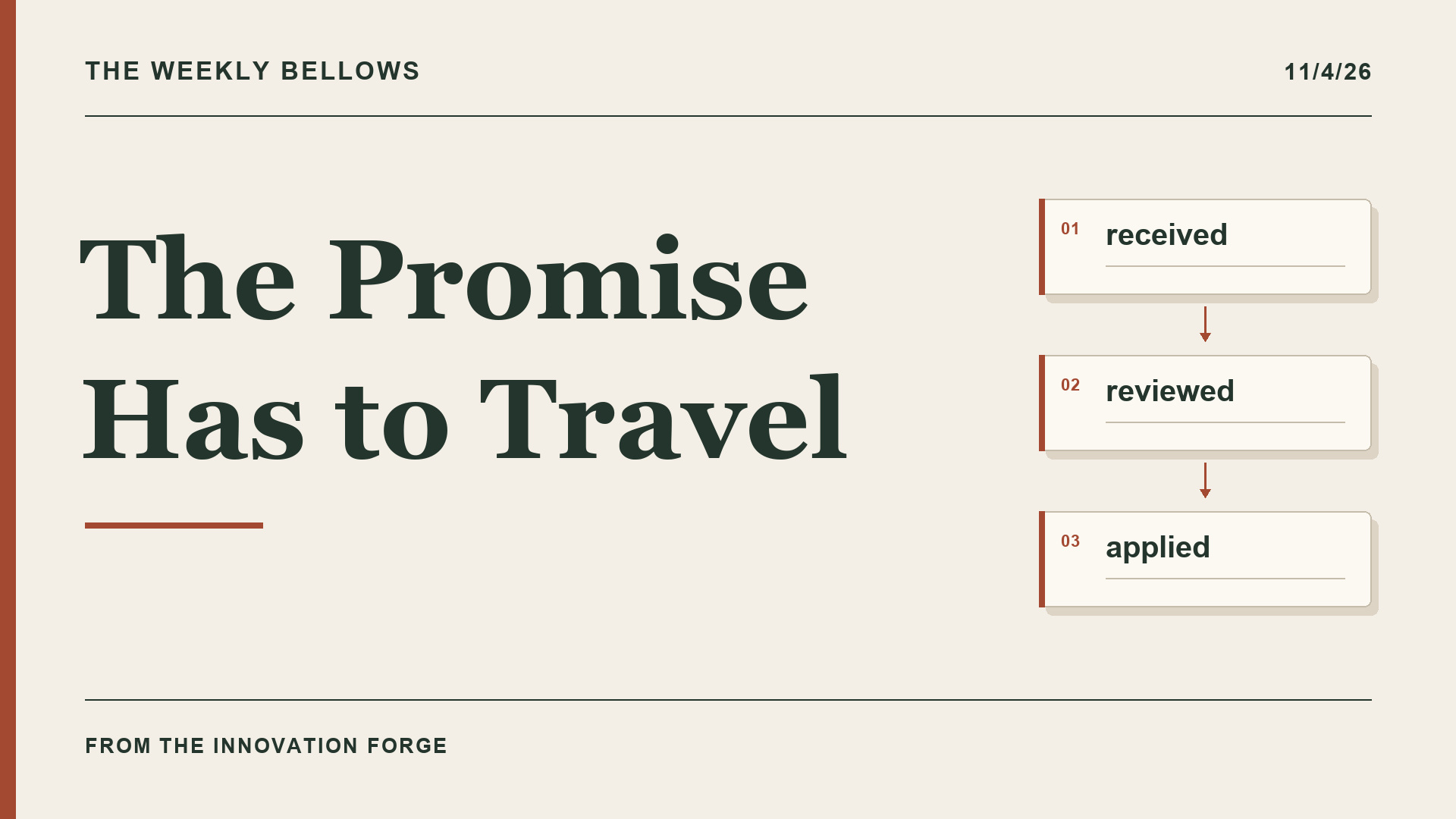
June takes a blank sheet and writes three headings for Rosa: received, reviewed, applied.
“We can tell you when the transcript arrives,” she says. “Then we need to tell you what the review found. And we need to show where any accepted credit fits in the program you’re considering.”
Rosa points to the third heading. “That’s the one I was asking about.”
This is a fictional exchange, not an example of a real institution’s compliance or a promised outcome. It illustrates a distinction the Department discusses in the rule: credit can be accepted without necessarily shortening a particular degree. A course that fills an available requirement and a course recorded as an additional elective may have different consequences for the student’s remaining work.¹
A welcoming conversation needs a reliable answer
In November 2 reporting, The Hechinger Report described colleges bringing faculty into conversations with prospective students. The reporting explicitly noted that one featured institution did not yet have data showing whether those visits led to applications or enrollment.²
The example is useful as a practice to examine, without turning it into a proven yield intervention. A warm welcome gives students room to ask questions. The institution then needs a dependable way to answer them.
For enrollment teams, that means making the handoff part of the service. A counselor should be able to explain which parts of a pathway are confirmed, which require an individual review, and who will provide the next answer. A student should not have to learn the organization chart to find out what a sentence on the program page means.
Try one promise, all the way through
Choose one public claim this week: a transfer pathway, a prior-learning opportunity, a short-course-to-degree connection or an aid statement. Bring its wording to a short working session with the people responsible for delivering it.
Record five things:
- The exact claim and where students see it.
- Its supporting source, status and applicable date.
- The academic or financial decision that must happen for this student.
- The person responsible for the answer, the next step and a realistic response time.
- What the student receives before making a commitment, and when the public wording must be reviewed again.
This is a suggested working method, not an additional federal form. Keep it small enough to maintain. A shared page or a carefully designed record in an existing system may be sufficient.
Then test the handoff with a plain question: “If I called today, what would you tell me?” If the website, counselor and evaluating office give incompatible answers, fix the wording and the route together. A rewritten sentence cannot repair an unresolved academic process. A sound process cannot help a student who cannot find it.
At the end of Rosa’s fictional visit, nobody has invented a credit award to make the meeting feel successful. Her folder still needs review. But she knows what she must provide, which decision is pending and who will explain the result.
She closes the brochure and takes the sheet with the three headings.
“That one,” she says, “I can use.”
An enrollment promise becomes useful when a student can carry it into the next decision. The craft is in making sure it still means the same thing when it gets there.
Sources and notes
1 U.S. Department of Education. Accreditation, Innovation, and Modernization: The Secretary’s Recognition of Accrediting Agencies; Institutional Eligibility Under the Higher Education Act of 1965, as Amended; Student Assistance General Provisions. Final rule, October 30, 2026, 91 FR 68626–68734, document 2026-22174. See section IV for implementation; section 602.24(e) for undergraduate transfer; section 668.43(a)(11), (c)(3)–(5) for disclosures. Primary legal source. https://www.govinfo.gov/content/pkg/FR-2026-10-30/html/2026-22174.htm
2 Jon Marcus. “As courting students gets tougher, colleges vie to make the admissions process friendlier.” The Hechinger Report, November 2, 2026, updated November 3. Independent reporting; examples do not establish causal enrollment effects. https://hechingerreport.org/courting-students-college-admissions-process/
This edition provides general reporting and editorial practice recommendations, not institution-specific legal advice. Fictional scenes are illustrative. Source status checked November 4, 2026.
From the workbench.
pdf / Version 1 / 77 KB
Trace One Enrollment Promise — printable workshop
A practical worksheet for following one public enrollment claim through its supporting source, decision, responsible role, student-facing answer, and next review.
Download Trace One Enrollment Promise — printable workshop (pdf)mp3 / Version 1 / 18.1 MB
The Promise Has to Travel — episode audio
The complete 13-minute episode, including the original opening and closing music, for listening offline.
Download The Promise Has to Travel — episode audio (mp3)